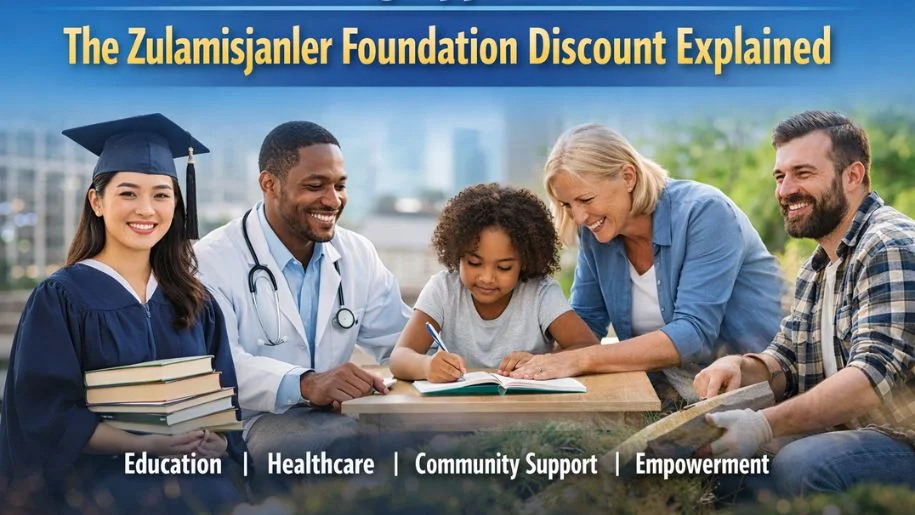
If you’ve heard about the Zulamisjanler Foundation discount and wondered what it actually means, you’re not alone. Many people confuse it with a standard charity donation, but it’s much more nuanced. This program is designed to make essential goods and services accessible while fostering a sense of participation and empowerment for communities and individuals alike.
Unlike traditional aid, which is often a one-way transfer of funds, the discount program focuses on practical, measurable benefits. Recipients can access educational tools, health services, or skill-building programs at reduced rates, all thanks to a carefully structured system of partnerships and subsidies.
What Is the Zulamisjanler Foundation Discount?
At its core, the Zulamisjanler Foundation is a nonprofit organization dedicated to uplifting underserved communities through initiatives in education, healthcare, and vocational support. The discount program allows individuals and organizations to access essential resources at lower costs, thanks to funds pooled from donors and partnerships with service providers.
Instead of giving cash directly, the foundation uses donations to subsidize costs, which ensures that beneficiaries not only receive assistance but also remain engaged in the process. This approach promotes long-term sustainability, accountability, and community involvement.
How the Discount Works
The system is simple when broken down into three main steps:
-
Donor Contributions: Funds from donors are pooled specifically to create discounted access to products or services.
-
Partnerships: Businesses, educational institutions, and service providers agree to offer goods at a lower cost to those eligible.
-
Direct Benefits: Eligible individuals or organizations receive vouchers, discount codes, or subsidized pricing, allowing them to participate fully without the financial burden.
This setup creates a win-win scenario: beneficiaries save money, businesses gain new customers and positive exposure, and donors see tangible outcomes from their contributions.
Real-World Impact
Consider a local artist named Emily. She struggled to purchase materials for her creative projects due to limited income. Through the foundation’s discount program, she was able to access the supplies she needed at a lower cost. This not only allowed her to complete her collection but also gave her the confidence to display her work in a local gallery. The discount didn’t just save money—it unlocked opportunity and personal growth.
Another example is a community learning center that wanted to run workshops for children but lacked funds. By using the foundation’s discount program to secure educational materials and training, they were able to host engaging sessions that significantly increased attendance and learning outcomes.
These scenarios demonstrate that the program is more than just a cost-saving measure—it actively empowers people to achieve goals they might have thought were unattainable.
Comparing Discount Programs to Traditional Aid
Here’s a simple breakdown of how the discount model differs from conventional donations:
| Feature | Traditional Donation | Discount-Based Support |
|---|---|---|
| Aid Delivery | Cash grants or one-time gifts | Subsidized products/services via vouchers or codes |
| Recipient Engagement | Passive reception | Active participation and involvement |
| Business Participation | Rare | Partners provide discounted services or goods |
| Transparency | Outcomes can be unclear | Direct, measurable cost benefits |
| Scalability | Limited by funds | Expands through partnerships |
This comparison highlights why the discount approach is gaining attention: it scales effectively, encourages responsibility, and fosters community collaboration.
Who Can Benefit?
The program is designed to be inclusive, targeting various groups:
-
Families with limited income who need access to essential goods or services
-
Students at any level seeking educational resources
-
Small organizations and nonprofits needing training or tools
-
Individuals with special needs or those from marginalized communities
Eligibility may vary depending on the program or service, often considering factors such as location, income level, age, or community engagement.
Personal Experience
I once attended a local community workshop where a family used a Zulamisjanler Foundation discount to obtain learning kits for their children. What struck me wasn’t just the money they saved—it was their sense of pride and ownership. They weren’t passive recipients of charity; they were active participants in their own educational journey.
This experience reflects the unique value of the program: it turns aid into empowerment.
Tips for Using the Discount
-
Check Eligibility: Some discounts may require documentation or proof of need.
-
Plan Ahead: Limited slots may exist for certain programs, so apply early when possible.
-
Combine Resources: If eligible for multiple initiatives, combine them to maximize benefits.
-
Engage with Providers: Establish a good relationship with the business or organization offering the discount to gain additional guidance and support.
Also Read: OnPressCapital: Strategic Funding & Growth Partner
Conclusion
The Zulamisjanler Foundation discount isn’t just a way to save money—it’s a powerful tool for empowerment and community development. By connecting donors, service providers, and beneficiaries, it creates a system where everyone gains something meaningful.
Whether you’re looking to support a local cause, access resources for yourself, or simply explore a new way of giving, this program represents a fresh, impactful approach to philanthropy. The focus isn’t just on financial assistance—it’s about fostering engagement, responsibility, and tangible outcomes that leave a lasting mark.
FAQs
Q: Does the discount cover the full cost?
A: Often, it reduces costs but may not eliminate them entirely, ensuring participants remain invested in the process.
Q: Can businesses benefit from the discount?
A: Yes, especially if they partner with the foundation to offer subsidized products or services.
Q: Is the program available internationally?
A: It is, though terms and availability vary depending on location and partners.
Q: Who qualifies for the program?
A: Eligibility is broad, often targeting low-income families, students, small nonprofits, and marginalized groups, though specific criteria apply per initiative.
Q: How can someone support the foundation?
A: Donations, volunteering, spreading awareness, or partnering as a service provider are all ways to contribute.